
In curling, you need the right stones, the right team and the right strategy.
Kurling for Kids brought all three to their new website, and we’re excited to share that they swept to two Gold Anthem Awards in the Health category: one for Donor & Volunteer Engagement and another for Event (Fundraising & Resource Development).
The Anthem Awards recognize organizations making meaningful social impact and are selected by selected by the International Academy of Digital Arts & Sciences. Past winners including Sabrina Carpenter, the ACLU, “The Daily Show with Trevor Noah” and World Central Kitchen.
This year, Kurling for Kids was among over 2,000 submissions from 42 countries.
About Kurling for Kids
To date, K4K has raised over $6 million for eight children’s hospitals across the country. This year alone, they’ve brought in more than $361,000 and are already past the halfway mark toward their $600,000 seasonal goal.
K4K hosts annual curling bonspiels across Canada to raise funds for children’s hospitals. What makes them remarkable is that they’re entirely volunteer-run. Every dollar raised goes directly to supporting sick children and their families.
“We are grateful for the recognition from the Anthem Awards among organizations making a positive impact, which reflects the dedication of our volunteers and supporters who help us improve the lives of sick children and their families,” said David Dienesch, Director of Sponsorships and Corporate Events at K4K.
K4K’s Web Experience
Our team worked with K4K to design and develop their online presence, powered by raisin Software and Apostrophe CMS. The goal was to create a digital experience that could support their growth across Canada while making it easy for volunteers to organize events, participants to fundraise, and donors to give.
The platform needed to handle everything from event registration to peer-to-peer fundraising to raffle ticket purchases, while staying true to K4K’s community-driven spirit.
We focused on creating seamless experiences that help supporters connect with the cause, take action – be it signing up for a tournament, making a donation, or rallying their network to fundraise – and celebrate progress with dynamic, real-time thermometers. As a Canadian organization based out of Montreal, the entire K4K browsing experience is also entirely bilingual in French and English.
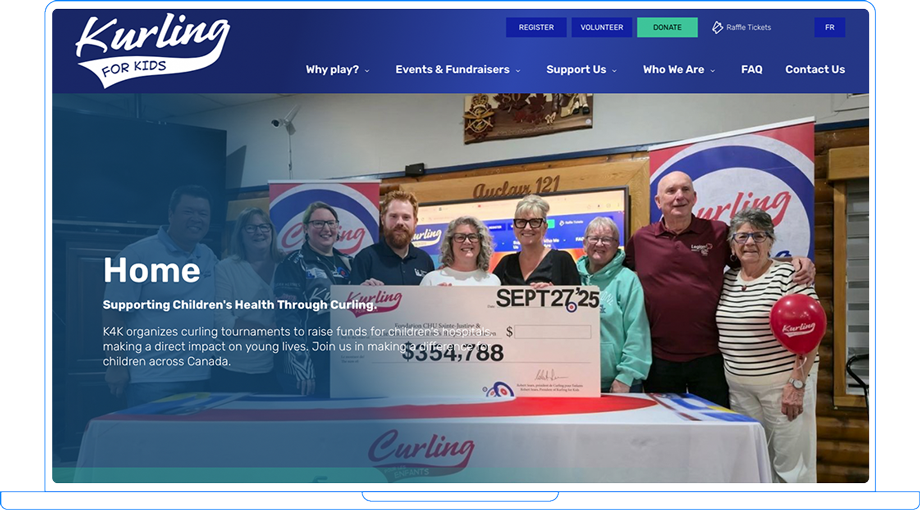
With more than 100 annual volunteers and up to 1,000 participants in peak years, K4K has built something special. The new platform gives them a foundation to keep growing that impact.
We’re proud to have partnered with K4K on this work, and we’re especially proud to see them hit the button with this recognition for the difference they’re making for kids across Canada.
Congratulations to the entire Kurling for Kids team on the win!
Read more about the Anthem Awards: anthemawards.com
See the award-winning platform: kurlingforkids.org
Think back to when peer-to-peer (or P2P) events, such as walkathons or ride-a-thons, were all offline. In Canada, depending on your age, many people still remember the Terry Fox Run or Jump Rope for Heart, with paper pledge sheets in hand, going door-to-door and asking neighbours for support. Sometimes you’d even have to go back later to collect the cash. That was the norm.
Today, those events look entirely different. Most organizations have shifted online and taken their peer-to-peer (pledge and multi-pledge) fundraising with them. It’s changed everything. Registration happens digitally, donations flow directly into the organization’s bank account, and participants can share personal fundraising pages with links or QR codes. The reach is bigger, the process is faster, and donors don’t need to worry about carrying cash.
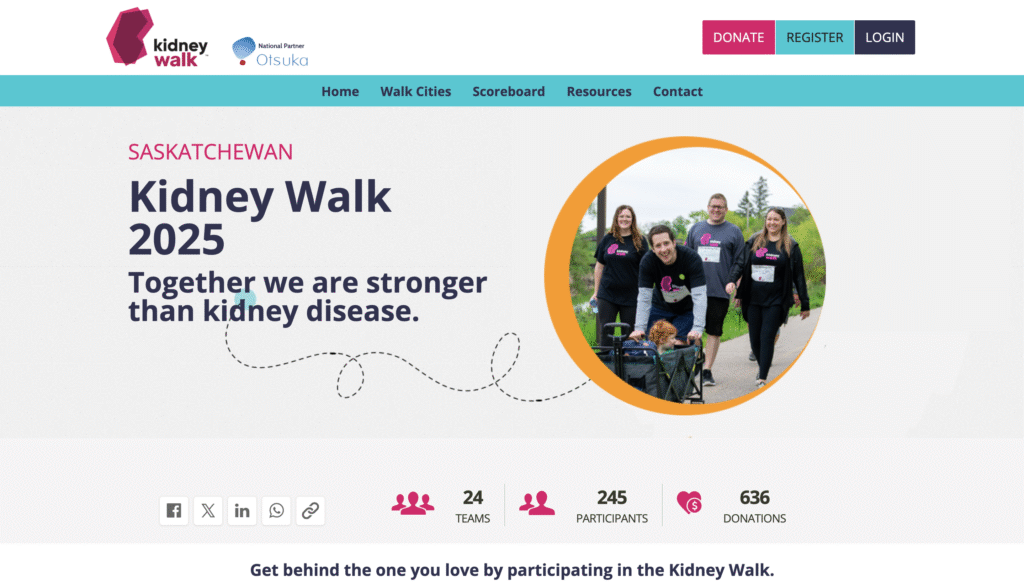
An example of a P2P event page hosted on raisin
Still, some groups with older donor bases continue to see a high percentage of offline pledges. For example, we have a nonprofit organization that still receives more than 50% of its gifts this way. They’ve adapted by managing both streams, but from an organizational perspective, online peer-to-peer fundraising is always preferred–it’s easier for accounting, reporting, and real-time tracking.
Three core elements of running P2P events online
The registration flow
The first thing to get right when hosting P2P events online is the registration flow. If it’s too complex, people drop off. Some organizations create long, confusing flows with multiple event types and distances to choose from. That might be fine for experienced participants used to complex registrations, but for most donor and participant bases, especially older ones, it gets overwhelming. The rule of thumb is “only ask what you really need, not what’s just nice to know.”
The fundraising story
The second core element is the story. In peer-to-peer fundraising, the story is often the most important thing you can control. For most participants, the default content you set will become their story. Many won’t customize their personal or team pages, so the images, messaging, and tone you provide are what donors see first. That’s a huge opportunity to frame the cause correctly and set the tone for the entire P2P fundraising experience.
But the story doesn’t stop at the page itself. It appears across every touchpoint: the emails from the participant center, the footers on automated updates, and even the reminders or thank-you notes that are sent along the way. When all of these pieces line up, every supporter, whether they’re donating through a friend’s page, opening a campaign email, or clicking into an event reminder, gets a consistent, meaningful impression of the organization and why the fundraising matters.
That consistency is what makes peer-to-peer fundraising powerful: the story doesn’t just live on the donation page; it’s carried across the whole journey, making every interaction feel connected to the cause.
Analytics and tracking
Tracking is the third piece. Weekly reporting is critical:
- How many participants have registered this week?
- How many of them have raised $0, and for how long since they registered?
With analytics, it’s easy to distinguish between someone who registered yesterday and hasn’t started yet and someone who registered a month ago and still hasn’t raised anything. That insight tells you when to nudge participants with follow-up emails or calls.
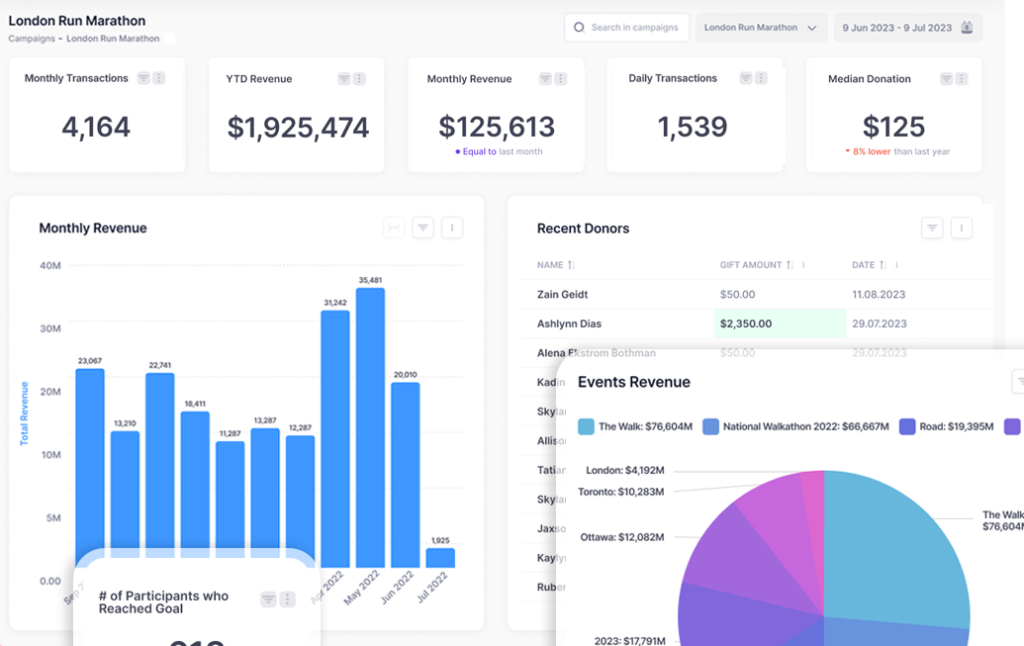
P2P events analytics dashboard
Five tips for successful P2P events
When it comes to setting nonprofits up for success with their peer-to-peer campaigns, here are a few things that have made (and will make) a difference:
- Email and participant center tools. These tools create a significant opportunity for engagement. They’re not just for reminding people who haven’t started fundraising yet, but also for celebrating the folks who have. Automation lets you send reminders, build excitement, and congratulate top fundraisers.
- Personal touches for top performers. If someone raises $10,000 or more, don’t just rely on an automated note. A personal email or even a phone call from leadership goes a long way. It makes them feel like a real champion for the cause, because they are.
- Digital check-in. On event day, the paper lists with participant names just don’t cut it anymore. Having a smooth digital check-in system saves time, avoids errors, reduces the strain on the team and the participants, and, perhaps more importantly, makes swag distribution easier.
- SMS for event-day communication. Being able to schedule emails about parking, logistics, or accessibility is really useful. And SMS is the next big thing here. Quick texts can reach people faster than email when they’re on the move.
- Scale-friendly tools. As the number of fundraisers increases, consider adopting an online fundraising software with features such as AI fundraising assistants. Or mobile-first apps that combine check-in, messaging, and updates. As the P2P events continue to scale, these features will help participants and fundraisers self-serve, reducing the need for your team’s attention to the minutiae of fundraising event planning and execution.
Promotion strategies for P2P events
The whole purpose of peer-to-peer fundraising events is to grow an organization’s reach through network effects. The events that really thrive are the ones that go beyond logistics and think intentionally about promotion.
What nonprofits can do themselves
- Build a community. The best events aren’t one-and-done. They create year-round communities where participants know each other, feel connected to the mission, and keep coming back. That sense of belonging is what encourages people to share and recruit.
- Tell a consistent story. Make sure the event story shows up everywhere, on your website, in your emails, and in your social posts. When people see the same message echoed across touchpoints, it feels bigger than just a single fundraiser.
- Keep communication flowing. Use email and social updates throughout the campaign to celebrate milestones, highlight top fundraisers, and spotlight impact. It keeps energy high and gives participants content they can reshare.
- Leverage digital ads and retargeting. If the budget allows, consider promoting the event through Facebook or Instagram ads to reach beyond your existing audience. Retarget people who visited the event page but didn’t register or donate.
How nonprofits can empower participants
- Gamify the experience. Leaderboards, badges, and friendly competition — whether team vs. team or individual challenges — give people a reason to push themselves and recruit others.
- Give them ready-to-use content. Provide social media graphics, sample posts, email templates, and quick text blurbs. The easier it is for participants to share, the more likely they are to do so.
- Encourage storytelling. Remind participants to explain why they’re fundraising. A personal story about their connection to the cause is more compelling than just a link. This is the heart of P2P fundraising: participants become advocates.
- Make sharing effortless. Equip pages with one-click share buttons for Facebook, Instagram, Twitter, LinkedIn, and email. Even small nudges like “Share your page now” in the participant center can make a big difference.
- Highlight peer influence. Showcase top fundraisers and recognize when participants bring in new donors. Public recognition motivates others to do the same.
How raisin helps nonprofits run P2P events online
raisin makes it easier for nonprofits not just to launch a peer-to-peer fundraising event, but to grow it sustainably. A few features stand out:
- Built-in referral program. P2P is all about network effects, and raisin gives participants the tools to spread the word. The referral program lets fundraisers earn badges and recognition for bringing in new donors or registrants. That built-in incentive encourages them to tap into their networks, making recruitment feel less like a burden.
- Super Starter onboarding. Getting participants to register is just step one; the challenge is getting them fundraising right away. raisin’s Super Starter sequence automatically guides new participants through key first steps: updating their page, making a self-donation, and sharing with their networks. Our research shows that nudging them in those first 48 hours increases the likelihood that they’ll stay engaged throughout the entire campaign.
- Support for admins and fundraisers alike. On the backend, staff get simple tools to track referrals, monitor who’s taking action, and identify where more support is needed. On the front end, fundraisers get a smoother, more guided experience that keeps them from stalling out.
Together, these tools make it easier to run p2p events online: participants start strong, they’re motivated to bring others in, and the organization can see which levers are working in real-time.
When both sides work together, with the organization setting the stage, and participants carrying the fire into their own networks, peer-to-peer fundraising events achieve what they’re designed for: multiplying reach and impact through the power of community.
Words by Sonia Amadi and Alicia Menzies
Peer-to-peer (P2P) fundraising has evolved into one of the most impactful ways nonprofits can expand their reach, deepen donor relationships, and drive meaningful revenue growth. However, succeeding with P2P engagement requires more than just setting up an event and hoping supporters will show up. It’s about experience, community, and consistent engagement.
A common misconception is that running a peer-to-peer fundraiser is as simple as hosting an event and waiting for people to return year after year. But that just isn’t enough anymore.
The turning point comes when organizations make their events memorable. One example is the Colorectal Cancer Alliance’s “Moment of Unsilence”, a powerful moment where participants scream together before their walk begins. That single addition transformed their event, sparking strong participant engagement and retention.
At its best, peer-to-peer fundraising is about the experience of participants and how they bring others into that experience. That’s what unlocks network effects and long-term engagement.
Recruitment strategies for participants
Strong recruitment starts with meeting people where their connection to the cause begins.
- Community partnerships. Breakthrough T1D Canada taps into hospital networks where families are first diagnosed with type 1 diabetes, inviting them to join local walks as a way to connect and build community.
- Local champions. Hockey Helps the Homeless relies on local co-chairs in each city to recruit participants from businesses and community networks. The Brain Tumour Foundation has also begun empowering community champions to lead local events when staff can’t.
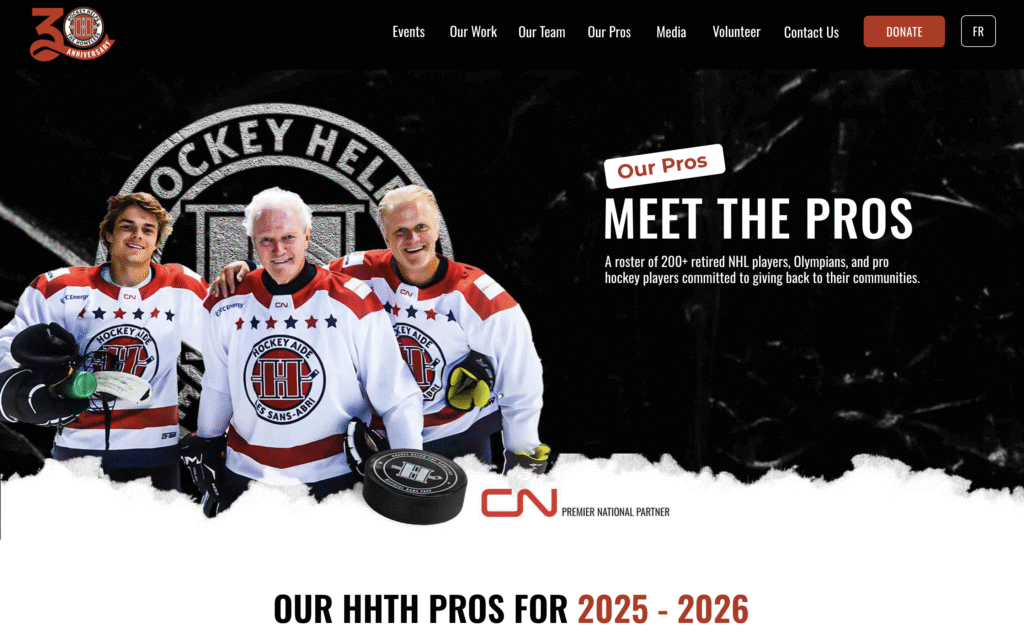
The HHTH Pros page (Hockey Helps the Homeless)
- Digital outreach. For CNIB’s Pup Crawl, an entirely virtual event, recruitment happens largely through Facebook and online advertising.
- Internal pathways. Some organizations use entry-level events, such as walks, as feeders into more intensive rides or tournaments, building supporter journeys that grow over time.
Equipping participants is just as important as recruiting them. Nonprofits that provide clear resources, FAQs, and fundraising toolkits see higher p2p engagement and stronger fundraising results.
Gamifying the P2P engagement experience
Gamification taps into participants’ sense of fun and friendly competition. Done well, it boosts both fundraising and retention.
Thermometers and online features
Before the event itself, digital gamification tools keep participants engaged on a day-to-day basis. Fundraising thermometers on personal and team pages create a visual sense of progress and urgency. Leaderboards spotlight top individuals or teams, sparking friendly competition. Badges for achievements like “self-donated” or “returning participant” reward consistency and keep participants motivated. These online features let supporters feel the same momentum in the weeks leading up to the event that they’ll feel on event day.
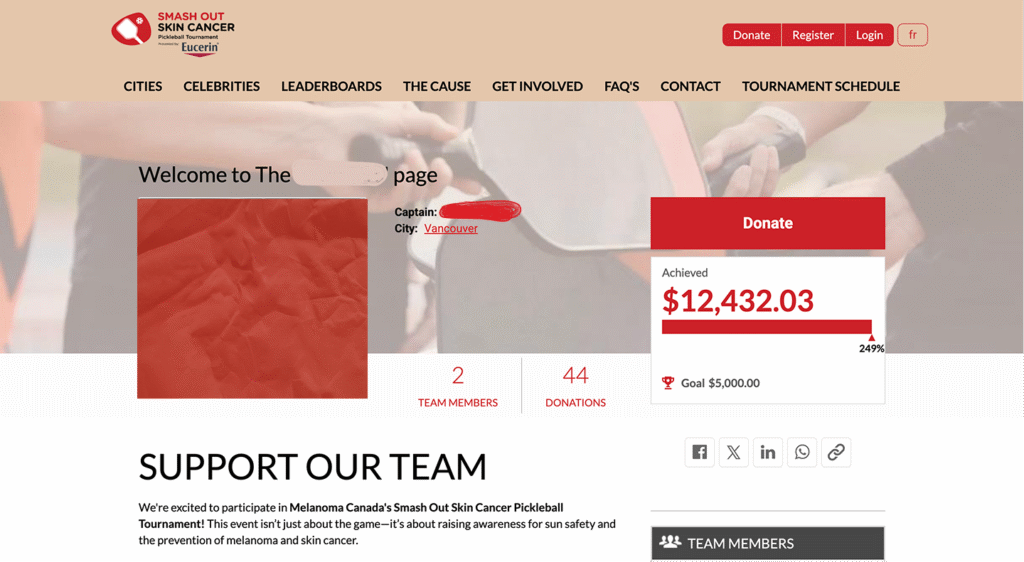
A P2P fundraising team page with a thermometer (Melanoma Canada)
Recognition through gear
The Princess Margaret Cancer Foundation doesn’t just reward fundraising milestones with digital thank-yous; they turn them into visible markers of achievement. Riders earn different jerseys and achievement badges based on their fundraising levels, creating a sense of pride and belonging. When you show up on event day in a jersey that signals you’ve raised $5,000 or more, it motivates both the participant wearing it and others who want to reach that level next year. Achievement gear becomes a kind of mobile billboard for the cause.
Pre-event incentives
At Jack Ride and Brain Tumour Foundation events, the momentum begins long before the event day. Riders who hit early thresholds might receive water bottles, hats, or even helmets sent to them in advance. Those early rewards are more than just tokens; they’re reminders that the event is approaching, nudges to keep fundraising, and a way to maintain high energy long before the start line. Pre-event incentives also create natural opportunities for social sharing, which fuels network effects.
Non-monetary recognition
Some organizations highlight top fundraisers on event banners or walls, or invite them on stage for a moment of thanks. These gestures give fundraisers a sense of pride that’s often more powerful than prizes. Survivor flags on bikes at cancer rides are another example: they carry deep meaning, honouring both participants and the community they represent. These touches reinforce why the fundraising matters, tying achievement back to the mission.
Social media amplification
Social media is now central to P2P engagement in fundraising. Its reach extends far beyond the event itself, making every participant a potential advocate. By equipping participants with stories and assets, nonprofits turn social posts into authentic calls-to-action that drive both awareness and donations.
- Storytelling. Video content from participants and patients resonates deeply, helping others understand the “why” behind the cause.
- Easy sharing. Organizations that create ready-to-use assets, graphics, captions, and hashtags remove barriers for participants and multiply their reach.
- Impact framing. CNIB shows progress in concrete terms, such as the number of service dog donations that will be funded, making sharing a lot more compelling.
How raisin supports P2P engagement
raisin makes it easier for nonprofits to design P2P campaigns that grow organically and keep participants motivated:
- Referral programs. Built-in tools enable participants to recruit friends and family directly, turning every supporter into a fundraiser. Fundraisers are motivated to recruit new donors or registrants through a referral program. That built-in incentive encourages them to tap into their networks, making recruitment feel less like a burden.
- Super Starter Onboarding. raisin’s Super Starter sequence automatically guides new participants through key first steps: updating their page, making a self-donation, and sharing with their networks. Step-by-step guidance for new participants helps them get fundraising fast, with templates and resources ready to use.
- Customizable fundraising portals. Nonprofits can set the right story with on-brand images, email templates and default messaging across personal and team pages. Thus making advocacy much easier and ensuring a strong first impression, even when participants don’t customize their fundraising pages.
- Milestone badges that actually move people. Badges are awarded for key behaviours, such as hitting a personal goal, making a self-donation, returning to the event, or captaining a team—and they display on the participant’s page and in their “trophy case” in the fundraising portal.
- Kick-start with bulk participant import. If you’re migrating last year’s riders/walkers or onboarding a whole roster at once, you can import participants (and teams/groups) in bulk. raisin auto-creates usernames, generates passwords, spins up default personal/team pages, and can send an automated email with the participant’s account information so that fundraising can start immediately.
- Targeted survey questions. Surveys can be dropped into specific moments. That way, you collect only what you need, when you need it. You control response types (lists, radios, multi-select, text), required/optional status, and conditional logic to reveal follow-ups based on a prior answer. Some examples of those moments:
- Registration: When a participant registers for the event.
- Team creation: When someone creates a team for the event.
- Donation/Sponsor: When a person or organization makes a donation to a participant or the event as a whole.
- Volunteer sign-up: When someone volunteers to help create/steward the event experience.
Peer-to-peer fundraising succeeds when it focuses on people and connection. The best campaigns do more than raise money; they create experiences that inspire participants to stay involved and bring others along.
By designing events around engagement, strong recruitment, meaningful storytelling, and easy sharing, nonprofits can build lasting communities. With tools like raisin, it’s easier to guide participants, celebrate progress, and track results so every event drives growth and deeper supporter relationships.
Words by Sonia Amadi and Jordana Knoblauch
Jordan and Pippen. Laverne and Shirley. Jobs and Wozniak. Moe, Larry and Curly. Ernie and Bert. Vladdy and Springer (obligatory PB&J reference for you Toronto Blue Jays fans out there).
Some teams are just too powerful for a single leader, and peer-to-peer fundraising is no different.
Team captains help spearhead your peer-to-peer fundraising efforts, creating a sense of shared purpose among the friends, family and colleagues that they’ve welcomed to your cause, and set an example for others on how to fundraise.
In raisin, Peer-to-Peer events support teams, team of teams, member management, team page personalization, team tagging, team leaderboards and more. By default, there’s been a maximum of one captain per P2P fundraising team (Note: it is possible for a team to have no captains).
But, like so many things in life, for some teams, two – or more – captains is better than one, and helps to amplify the fundraising efforts of the team in their community.
That’s why we’re introducing Team Co-Captains.
Now, your peer-to-peer fundraising teams can have multiple leaders championing your cause. Because when great leaders join forces, amazing things happen.
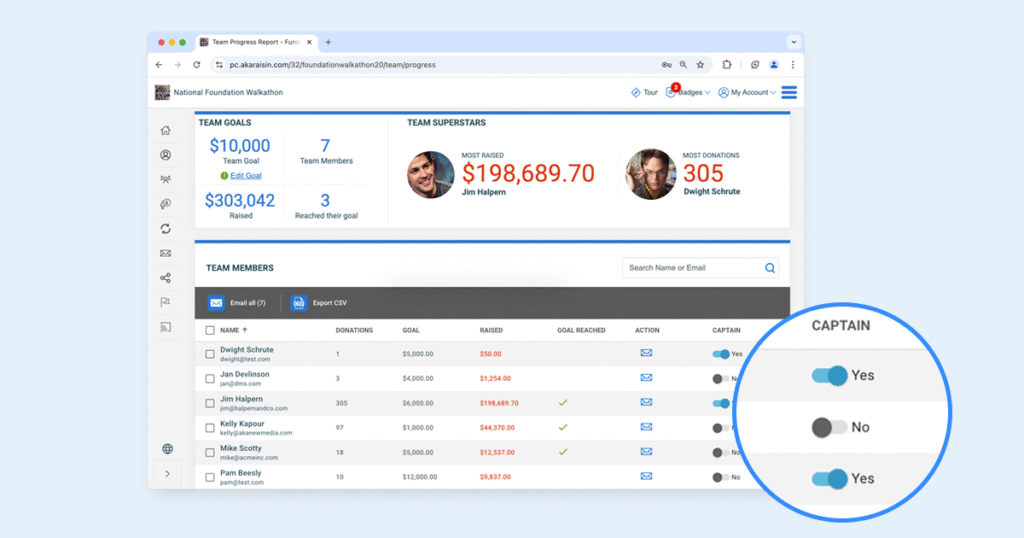
Elevate team leadership
Once promoted to captain status, Co-Captains get full captain powers. They’ll update team pages, track progress, receive captain notifications and thank team donors.
Be they family members, sports teammates or office pals, with multiple captains at the helm, your peer-to-peer fundraising teams move faster and achieve more… and your events team does, too.
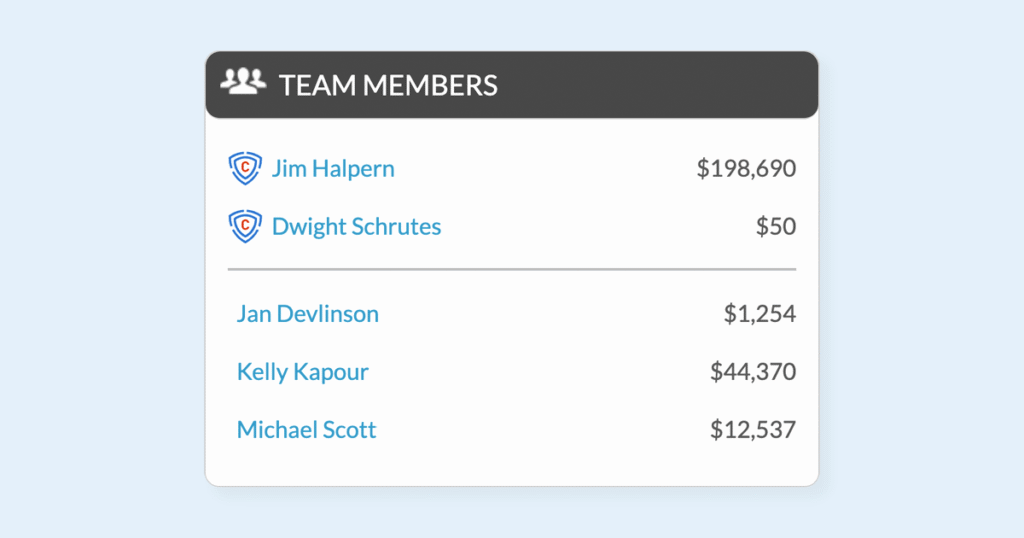
Spotlight and celebrate your champions
Co-Captains earn coveted “Team Captain” badges and stand out on their team’s fundraising page. Nothing builds pride or momentum like publicly celebrating those who step up to lead – it’s the badge of honour that shows the whole community who’s committed to your cause.
How it works
Promoting Co-Captains is simple.
With the flip of a switch in your Peer-to-Peer fundraising campaigns on raisin, existing team captains have the ability to designate teammates as Co-Captains directly from their Fundraising Portal.
Just the same, your fundraising event staff can promote any event participant to become a Co-Captain directly from the team management interface. There’s no limit to how many Co-Captains a team can have – whether it’s two, three, or more – the team decides what works best for their fundraising.
All Co-Captains have equal access to:
- Team page editing and personalization
- Member management and communications
- Donation tracking and team donor thank-you messages
- Captain-specific notifications and updates
Co-Captains appear with their Captain fundraising badge on the team fundraising page.
Ready to name your captains?
- Team Co-Captains is available now for single location or multi-location peer-to-peer events with our P2P+ Package
- Check out our Help Centre guide to learn how to make your peer-to-peer participants co-captains
- Not part of the raisin team yet? Book a discovery to find out more about our P2P plays.