
You’ve led major engineering and product transformation across different sectors, from insurance to international development.
What made you choose to bring your skills into the nonprofit space, and what lessons are you carrying into your work?
Until four years ago, my career was best summarized as helping large companies increase their profits. And through that era, I was involved in some really awesome and cool technology projects. I worked with some fantastic people, and it was also a lucrative field to be in at that time. But when I put my head down on my pillow at night, I didn’t feel that great about making an insurance or telecommunications company more money.
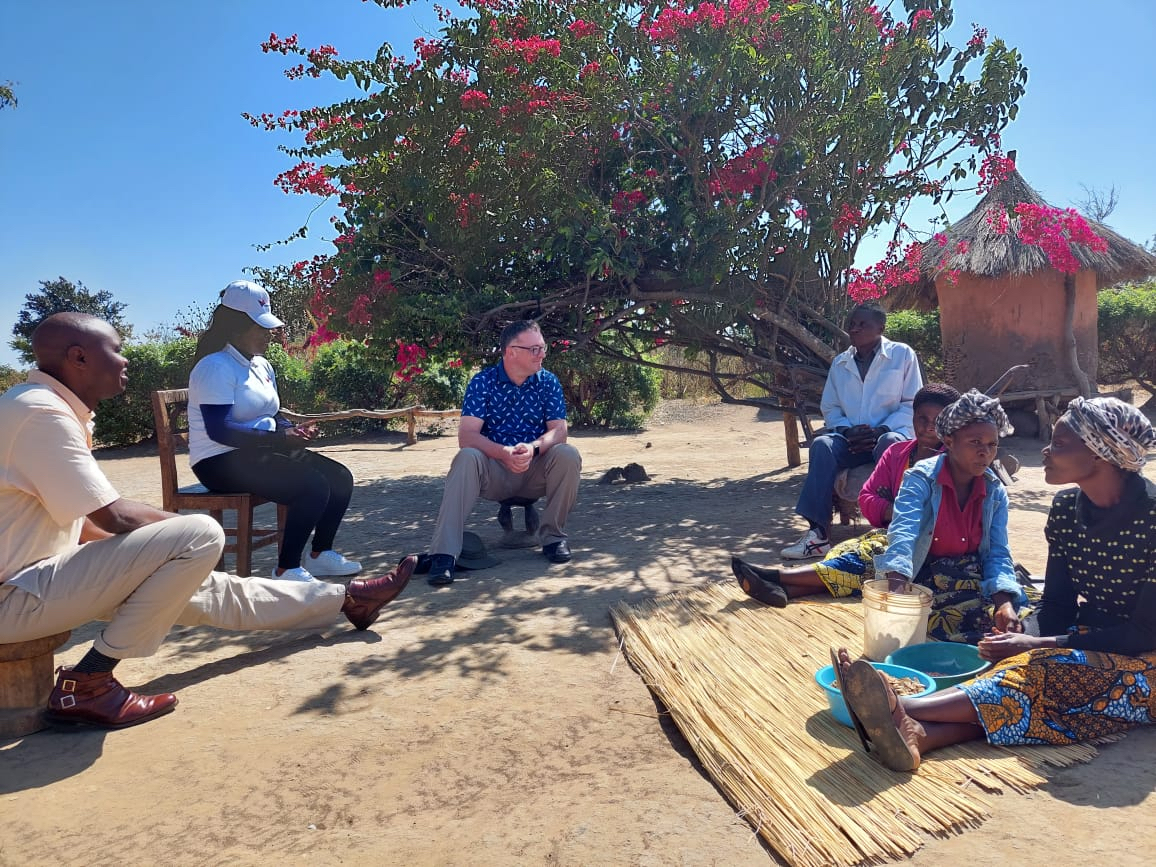
About four years ago, I got an inbound call from a recruiter at an organization that was operating a communication platform across Africa. Their user base was people at the bottom of the economic pyramid, who had nothing more than a basic phone. These individuals often had no access to power or running water. That phone and the information service they called into were their lifeline to the world. Through that organization, they received important information on family planning, farming practices, and other relevant topics.
So, as soon as I heard about that opportunity, I jumped at it and had a really rewarding three years of doing that work. And it helped me understand that my time and my work as an engineering leader could be used for good.
I received a similar call a few months ago about a company in Canada called raisin, which I was not familiar with. When I looked into raisin and found out that we’ve spent over two decades helping nonprofits raise money, it was just a question of how quickly I could sign up to be part of that. I’m really excited to be here.
We’re really excited to have you here as well, Darryl.
What role would you say software plays in helping nonprofits grow, connect with their community and create change?
You said software, but I think technology in general is a great connector. It’s also a great efficiency multiplier. It can be used to connect people within an organization and to their constituents, including potential donors, fundraisers, and potential beneficiaries of the nonprofit.
In our world of fundraising, tasks such as handling payments, issuing tax receipts, and building community are a massive burden for many nonprofits. Automating these tasks can significantly reduce that burden, as nonprofits are typically understaffed. So, as I mentioned, technology can be a great connector and a force multiplier in terms of efficiency.
How do you build technology that is human, intuitive, and actually useful to people who work at nonprofits?
I think to anyone who’s not a technologist, not just in the nonprofit space, technology is a black box. Most of us don’t actually understand what’s inside our phones or our laptops. So, it’s crucial for us as technical people to remind ourselves of that.
The only thing people care about is what that technology does for them. So, building something intuitive, human, and useful is essential. Much of that is achieved by adopting a design and user research mentality, and saying, “I want to understand my users really well,”…“I want to design a system that’s easy to use and actually does useful things efficiently.” That’s the core of it.
Sometimes the technology is very simple, but at other times it’s very sophisticated and complicated; you can still use great technology to deliver that experience. But no one really cares what programming language you used to build that technology. It’s good to remind ourselves as technologists that what really matters is what the thing does on the outside.
In line with that, what are some key technology initiatives you’re excited to drive at raisin 2.0?
I can tell you some really exciting things on our roadmap that are happening right now. One of those is called “raisin Payments”.
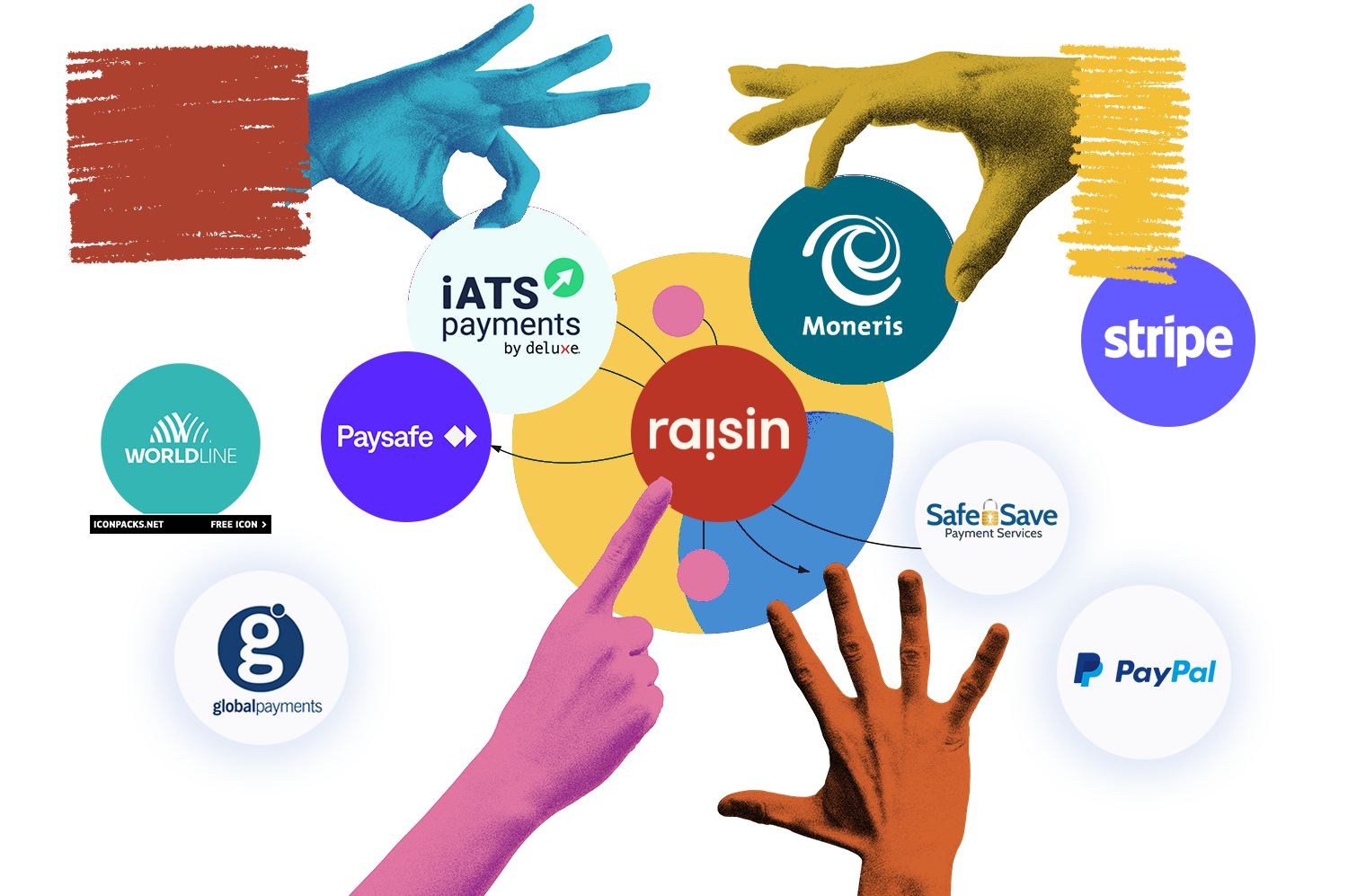
Today, raisin integrates with seven or eight different payment providers, each with its own fee schedule and technology. raisin is now becoming a payment provider and a one-stop shop for nonprofit fundraising. This results in simplified administration and lower fees, which means that our nonprofit clients can keep a higher percentage of their donation amounts.
So that’s the number one that’s going on right now.
The second thing is that we’re starting to incorporate AI into our software. When raising money for fundraising events like Movember, the biggest pain for me was creating social media or email posts to potential donors. On multiple occasions, I was blocked by not being able to do that quickly.
We’re almost finished putting in some AI capabilities to help people write things like social media posts that are personalized and have all the necessary information about the cause they’re fundraising for.
That’s a feature I’m sure donors would love to try out. What’s the best advice you’ve ever received as a leader, and just generally in the course of your career?
I’ve received plenty of good advice over the years. But the piece of advice that’s stuck with me is something I observed early in my career.
I looked at the leaders whom I liked and for whom I did my best work. And I realized they were people who cared about me and, in general, their team members. So, not just their direct reports, but everyone on their team. So even if they were the CEO, they made a point of caring about everybody. Those leaders ultimately got the best out of their employees.
It’s become a habit. That genuine care you have for people creates an environment where people do their best work. And that’s what you really want. It’s the best thing to do, and it’s the right thing to do.
What’s a tech trend that you’re observing, but you’re not sold on just yet? Especially since you’ve already worked in the cutting-edge part of the space, Gen AI.
My answer is AI in general. I’m obviously sold on parts of it, but I also know the limitations and dangers of AI. Partly because I’m a technologist, partly because I put it into practice in the real world. So I’m worried about a couple of specific things around generative AI and AI in general.
One is the reduction in people’s willingness or ability to think. I’ve seen some recent studies, and they’re just starting to understand how young people are using generative AI to do a significant amount of their homework or thinking. They’re actually becoming less able to think independently, which is somewhat terrifying. I don’t want to see a society where we stop thinking and leave it all to an AI.
The second thing is the environmental piece. OpenAI said they spend tens of millions of dollars on people who say “thank you”. It’s obviously lovely that people are saying “thank you”, but that round trip from someone saying “thank you” to ChatGPT responding costs processing time on a server somewhere.
That’s concerning because of how much the use of AI, with all these servers and GPUs (the graphics processing units that drive all the AI technology), is hurting our environment, especially in a world where we’re already starting to see major weather events and impacts from our climate. So while I’m sold on the use cases, I’m also a bit concerned.
These are serious concerns. So, why is it still worth it for nonprofits to invest in AI tooling
The reason that investment in AI is vital for nonprofits is to allow them to accomplish more with the limited resources they have. The ability to create a chatbot that can engage with potential donors, or allow someone participating in an event to compose social media posts that help them raise more funds for their cause, is too valuable to ignore.
Given that our nonprofit partners are raising funds for activities like cancer research and improving mental health, their missions are essential to all of us.
Hello! My name is Darry Ricker. I’m the Chief Technology Officer here at raisin. I’ve spent a couple of decades in and around the Toronto area working at various tech companies, leading tech teams, and sometimes, product management teams as well.
Have thoughts about the future of fundraising and NFP tech? Grab some time to chat with us.
You joined raisin in September 2020. What did those early days teach you about building genuine connections?
So the early days, when I first came on, it was in the peak of COVID, and I found it was really easy to humanize each other because you were getting this peek behind the curtains. You know, there’s a cat walking across your board, or your child is running around in the background. And I think it just helped make things feel more genuine. And that genuineness is what I try to carry through the day-to-day.
I think that really helped to humanize everybody, and it just made it feel like you got to know people a little bit better in this weirdly intimate way.
Totally agree with you. COVID was terrible, but it helped build connections. Now, before that, you taught English abroad for a number of years. How did that shape your approach to supporting nonprofits?
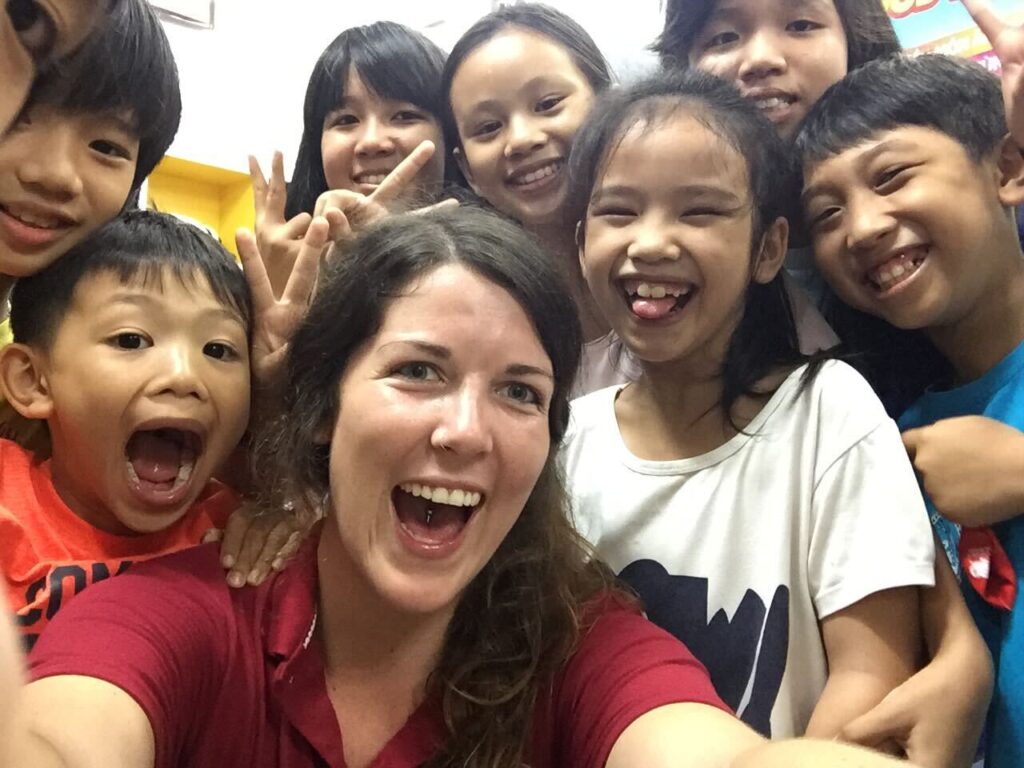
Yeah. So, there’s actually so much overlap between teaching somebody another language and teaching them how to use new software. I think one of the biggest similarities between both of them is that if you can’t explain something right the first time, you have to find a new way to explain it.
Same thing with a word you could use in a sentence. If the word isn’t clicking, you need to find a new example, a new definition. It’s the same thing with explaining a concept with software.
You just need to get a little bit more creative and be able to translate it in a way that makes sense for that person, because everybody’s going to be different.
That makes a lot of sense.
You recently celebrated your anniversary. Congratulations again 🎉
Thank you!
Now, you’ve evolved into what Star [raisin’s COO] calls the true raisin product whisperer, and I’ve seen it in action. It’s impressive. Were there specific moments or projects that helped you gain that depth of experience?
I think I’m just very inquisitive. I want to know the “how,” and I want to know the “why”. And that has been a big thing ever since I started with raisin. I also have to commend my team for feeding into me and answering my 8 million questions.
When you know why something works the way it does, it’s a lot easier to train others on it. And it’s a lot easier to investigate if something isn’t working as it should.
So I think that inquisitiveness and the need to know a little bit deeper have paid off immensely. That’s been the biggest strength and has really helped along the way in both roles.
What’s a campaign or project you are most proud of being involved in?
There are so many to choose from, which I think is the best part, because all organizations are different, and their causes are different. I think the most fun was with Janeway Children’s Hospital Foundation, out on the East Coast, and onboarding was really hands-on.
They had a commercial spot, and we were going live 10 minutes before that. So, we hit the switch, went live, tested the gateway, and everything was good. Then, the commercial aired, and I was still on the phone when they got their first organic donation. We all celebrated together.
It’s just really nice to be a part of that moment and really feel like you’re an extension of the team. And, yeah, there are many to choose from, but that was a really fun experience.
That sounds very exciting. I can’t even imagine how it felt.
It was stressful because we weren’t sure if we were gonna make it on time. But when we did, it was that much more of a celebration.
What does seamless onboarding look like? How does that experience feel for non-profit clients, especially those running their first fundraising events with raisin?
For me, a seamless onboarding experience is simply feeling supported. I’m incredibly hands-on, to the point where I might be annoying to you and your team. But I’m going to be involved every step of the way.
I always say there are no stupid questions. When I first started raisin, I had a really stupid question I needed to ask, and I didn’t. That made my work unnecessarily difficult for a week.
So I want people to feel supported. I want them to feel confident. And to know that they always have somebody to go to. With raisin, you’re not just getting sent out to the wolves once you’ve gone through your training.
To be able to feel supported, heard, seen, and to have somebody to actually work with, instead of just throwing some training at you. That’s my definition of seamless onboarding, and I’m glad that raisin clients get to enjoy that with me.
That sounds a lot like empathy. So, how do you balance technical troubleshooting with genuine care for the people you’re supporting?
In support roles, people are coming to you with problems. That’s never the happiest version of them you’re going to get.
I want people to feel heard more than anything, and to be honest with them. If there’s a mistake on either end, I’m not going to fluff things up just to spare feelings. I want the people raisin supports to feel like they are a part of the journey to success, even if it’s not always positive.
So, transparency is really, really important here. And again, just treating people like humans.
What’s one key outcome you’d like every client to feel after onboarding?
raisin Software has so much flexibility and a great front-facing website builder. We’re not all web designers or developers, but raisin makes you feel as if you were.
So, after onboarding, I want clients to feel good about their sites. I want to make you feel like you’ve made something beautiful and really professional. I want everyone to walk away and feel proud of what they put together. To know that you did that. It might not be specifically your role, but I want you to feel really proud of your work.
If onboarding and support had a mission statement under your leadership, what three words would sum that mission statement up?
Confident. Informed. In control.
I want you to feel like you have a say. I want you to feel like you’re part of this, whether that’s feedback, learning, or helping us build out the product.
What’s one tip or word of wisdom that you can share on how nonprofits can get the best from support teams?
If someone wants to get the best value out of support, come to us with more information than you think we need. Screenshots, your participant IDs, your event IDs, every single piece of information, if you can throw it in there, even if you don’t think it’s relevant.
It eliminates a lot of back and forth, and helps point us in the right direction. We can troubleshoot and eliminate issues just based on that information. So when you’re coming, give us everything you’ve got, all the information you possibly can to help us work along the way.
Hello! I’m Kendra, and I’ve just stepped into the Manager of Onboarding and Support role here at raisin – a journey that feels pretty meaningful to me.
Over the past five years, I’ve had the chance to grow within our company, starting as an Accounts Coordinator, then Onboarding Manager, and now into Support. It’s been one of those career paths where each role built on the last, giving me a pretty comprehensive view of how everything connects.
What I love most about this new role is that I get to be there for people during those crucial first moments. Helping them navigate their first campaigns, making sure they feel confident and supported, watching them flourish with their dedicated Client Experience Managers – and then seeing them again in our support channels.
It’s like being part of their story from the very beginning, and watching it unfold in the best ways. There’s something pretty special in that.